
Introduction: A Simple Question With a Surprisingly Big Answer
You’ve probably seen it pop up in comments, memes, or random recommendation lists and thought, wait… what is BFDI? At first glance, it sounds like a technical term or maybe an acronym tied to something serious. But once you dig a little deeper, you realize it’s something far more playful, creative, and internet-driven.
BFDI isn’t new, yet it keeps resurfacing. New fans discover it every year, while older fans stick around, remixing, quoting, and debating it like it never left. That staying power doesn’t happen by accident. It comes from a mix of humor, imagination, and a surprisingly strong sense of community.
So let’s break it down calmly and clearly, without overthinking it. By the end of this article, you’ll know exactly what BFDI is, why people care about it, and how it managed to carve out a permanent corner of internet culture.
The Meaning Behind the Name
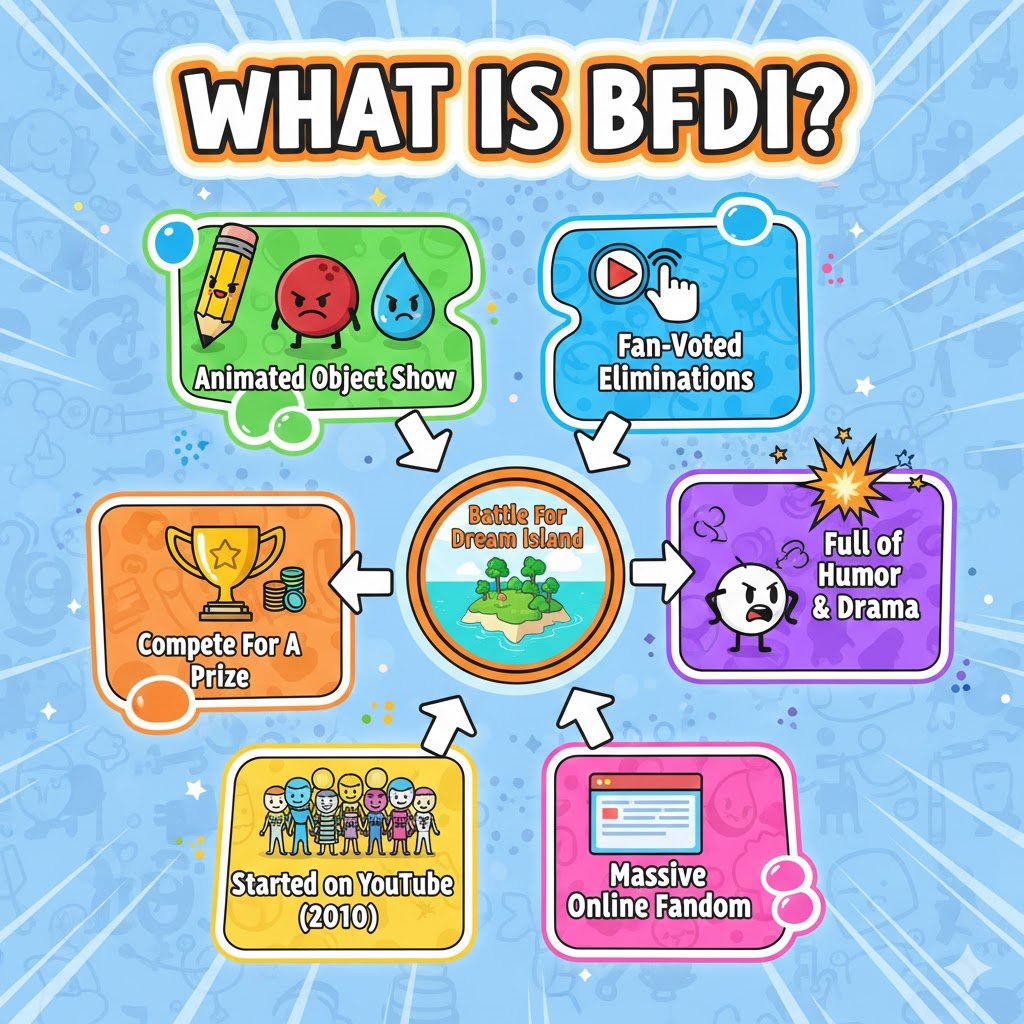
BFDI stands for Battle for Dream Island. It’s an animated web series that first appeared online and quickly developed a following that went far beyond casual viewing.
At its core, the concept is simple. A group of animated objects compete in challenges, and one contestant is eliminated each episode. Sounds straightforward, right? Well, the charm lies in how that idea is executed.
The characters aren’t humans or animals. They’re everyday objects with personalities, emotions, flaws, and rivalries. And somehow, that works incredibly well.
Where BFDI Came From
BFDI was created by Michael and Cary Huang and first released online in 2010. At the time, internet animation was still finding its rhythm. Platforms weren’t flooded with content yet, which allowed creative ideas to stand out more easily.
The series didn’t rely on flashy visuals or complex animation techniques. Instead, it leaned on clever writing, sharp humor, and memorable characters. That combination helped it spread naturally through word of mouth rather than heavy promotion.
People shared it because they genuinely enjoyed it, not because an algorithm pushed it in front of them.
The Core Concept Explained Simply
To understand the appeal, it helps to understand the structure. Each season follows a similar setup:
- A group of object characters compete in challenges
- One or more contestants are up for elimination
- Viewers often get involved through voting
- The last remaining contestant wins
This competitive format gives the show momentum. There’s always something at stake, even if the tone stays light and humorous.
And yes, the idea of cheering for a talking pencil or arguing about a leafy character sounds odd at first. But once you’re in, you’re in.
Characters That Feel Strangely Real
One reason BFDI sticks with people is its characters. Despite being objects, they behave in ways that feel very human. Some are competitive. Others are lazy. A few are overly confident, while some are quietly clever. Conflicts happen, alliances form, and misunderstandings spiral into drama. It’s exaggerated, sure, but it’s relatable.
Viewers don’t just watch the characters. They pick favorites, defend them, criticize them, and sometimes argue endlessly about them online. That emotional investment is a big deal.
The Humor That Makes It Click
BFDI doesn’t try to be polished comedy. Its humor is often awkward, unexpected, or intentionally silly. Jokes land because they’re surprising, not because they’re refined. Sometimes the humor comes from:
- Sudden shifts in tone
- Characters reacting badly to simple situations
- Absurd logic taken very seriously
It’s the kind of humor that grows on you. At first, you might smile. Later, you start quoting lines without realizing it.
Why People Still Ask What Is BFDI
More than a decade after its debut, people still ask, what is bfdi? That question keeps resurfacing because new viewers keep discovering it.
Unlike shows that age poorly, BFDI feels oddly timeless. The animation style doesn’t rely on trends, and the humor isn’t locked to one era. As a result, it doesn’t feel outdated, even years later. New fans arrive curious. Old fans stay nostalgic. And the cycle keeps going.
Fan Interaction and Community Culture
One of the most interesting aspects of BFDI is its community. Fans don’t just watch episodes. They participate. Over the years, the fandom has produced:
- Fan art and animations
- Custom object characters
- Spin-off concepts
- Discussion threads and debates
People don’t just consume the content. They build on it.
This level of interaction gives BFDI a life beyond the episodes themselves. It becomes a shared space for creativity rather than a one-way experience.
Viewer Voting and Engagement
Audience participation played a major role in BFDI’s popularity. Viewers often had the power to vote on eliminations, which made them feel involved rather than passive.
That sense of influence changes how people watch. When your vote matters, you pay closer attention. You care more about strategy, character behavior, and outcomes. Suddenly, it’s not just a show. It’s an experience.
Why the Simple Animation Style Works
BFDI doesn’t rely on smooth animation or complex effects. In fact, its simplicity is part of the charm. The clean visuals:
- Keep focus on dialogue and ideas
- Make characters instantly recognizable
- Allow faster production and experimentation
Instead of distracting from the story, the animation supports it. That balance helps maintain consistency across episodes and seasons.
Internet Longevity and Meme Culture
BFDI has survived multiple internet eras, which isn’t easy. Platforms change, trends fade, and attention spans shrink. Yet BFDI keeps finding relevance.
Part of that comes from meme culture. Short clips, screenshots, and quotes circulate independently of full episodes. Even people who haven’t watched the series sometimes recognize references.
That kind of cultural echo keeps interest alive.
Is BFDI Just for Kids?
This question comes up a lot, and the answer isn’t black and white.
While the visuals and premise might seem child-friendly, many adults enjoy BFDI for its humor, creativity, and community aspect. The show doesn’t talk down to its audience, which makes it accessible across age groups.
In short, it’s not age-restricted. It’s curiosity-restricted. If you enjoy imaginative storytelling, you’ll probably enjoy it.
Why BFDI Feels Different From Traditional Cartoons
Traditional cartoons usually follow fixed scripts and closed storylines. BFDI, on the other hand, feels more open and experimental. Its structure allows:
- Unexpected outcomes
- Viewer influence
- Long-term character arcs
That flexibility keeps things interesting. You never fully know how things will unfold, and that unpredictability keeps viewers engaged.
The Emotional Side of an Object Show
It might sound strange, but BFDI has emotional moments. Characters face disappointment, betrayal, and loss, even if it’s framed humorously.
Those moments add depth. They remind viewers that the story isn’t just about winning. It’s about interaction, growth, and consequence.
And yes, people do get emotionally attached. Very attached.
FAQs
What is BFDI exactly?
BFDI stands for Battle for Dream Island, an animated web series where object characters compete in elimination challenges?
Who created BFDI?
It was created by Michael and Cary Huang and first released online in 2010?
Is BFDI still ongoing?
The franchise has expanded over time with multiple seasons and related projects?
Why is BFDI so popular?
Its mix of humor, viewer interaction, creative characters, and community involvement keeps people engaged?
Do you need to watch from the beginning?
Starting from the beginning helps, but many viewers jump in and still enjoy it?
Conclusion: So, What Is BFDI Really?
At its heart, BFDI is more than an animated competition. It’s a long-running example of what happens when creativity, community, and curiosity collide.
If someone asks you what BFDI is, the simplest answer is this: it’s a show that proves ideas don’t need to be complicated to be meaningful. Sometimes, all it takes is imagination, a little humor, and a group of objects competing for something that feels important. And honestly, that’s why people are still talking about it today.