
Introduction: Walking Into a Living Story
Some places don’t just show history. They breathe it. You walk in, look up, and suddenly feel small in the best possible way. The air feels different, heavier with stories, lighter with wonder. That’s exactly the feeling many people get when they step into the National History Museum in London for the first time.
It isn’t just a building filled with old objects. It’s a space where dinosaurs loom overhead, gemstones sparkle like they’re alive, and the planet’s story unfolds right in front of your eyes. Kids gasp. Adults slow down. Everyone looks up at least once and thinks, ‘Wow.’
This article explores the museum not as a checklist of exhibits, but as an experience that blends science, history, curiosity, and a little bit of magic.
A Building That Speaks Before You Even Enter
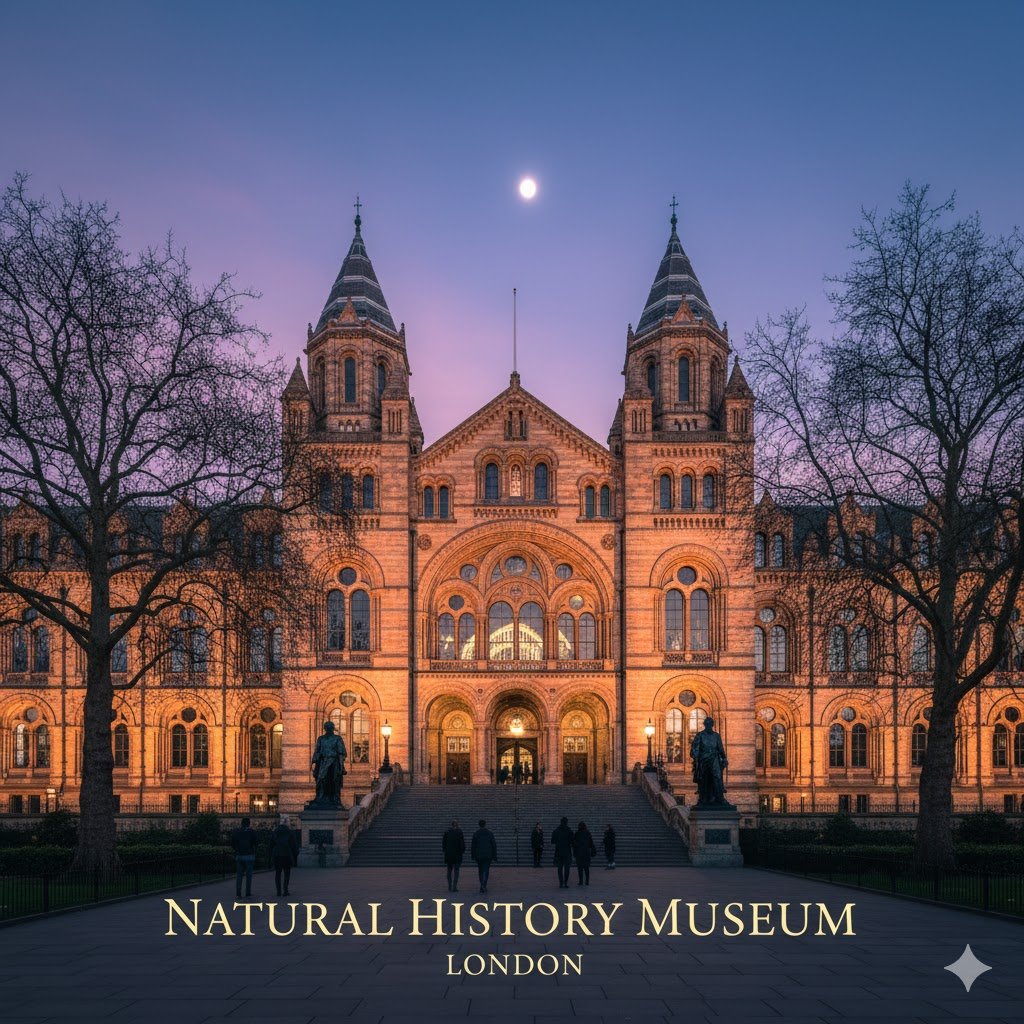
Before you see a single exhibit, the museum already has your attention. The architecture alone feels like it belongs to another era, almost like a cathedral built in honour of the natural world.
With its Romanesque design, towering arches, and detailed stonework, the building quietly sets the mood. It doesn’t shout for attention, yet it commands it. Standing outside with a camera in hand, it’s easy to forget you haven’t even stepped inside yet.
That first impression matters. It prepares you for what’s coming, a journey measured not in minutes, but in millions of years.
The Hintze Hall: Where Wonder Begins
Walking through the doors leads straight into Hintze Hall, a space so grand it often stops people mid-step. The sheer scale is impressive, but it’s the enormous blue whale skeleton suspended above that truly captures attention. This is not just a display. It’s a statement.
The hall sets the tone for the entire visit. Conversations soften, footsteps slow, and suddenly everyone is looking upward, lost in thought.
Dinosaurs That Never Get Old
Dinosaurs are a major draw, and they never lose their impact. From towering skeletons to interactive displays, the dinosaur galleries manage to feel educational without being dull.
Visitors don’t just see fossils. They learn how these creatures lived, moved, and eventually disappeared. Children stand face to face with prehistoric giants, while adults rediscover the same sense of awe they felt years ago. It’s nostalgia mixed with fresh understanding, and it works.
Earth’s Power on Full Display
Few sections highlight humanity’s small place in the world like the Earth sciences galleries. Volcanoes, earthquakes, and shifting tectonic plates come together in ways that are easy to grasp.
The earthquake simulator, in particular, leaves an impression. It’s brief, intense, and memorable. In just moments, it shows how powerful and unpredictable the planet can be. It doesn’t scare people. It gives perspective.
Gems, Minerals, and a Touch of Sparkle
After the intensity of dinosaurs and natural disasters, the gemstone galleries offer a calmer pace. Soft lighting reveals crystals, rare minerals, and stones formed deep within the Earth.
People slow down here. They lean closer, admire colors, and quietly take it all in. Even visitors who claim they are not interested in rocks usually pause longer than expected. Science meets beauty without trying too hard.
Life on Earth: Everything Is Connected
One of the museum’s strongest qualities is how it links everything together. Animals, plants, ecosystems, and humans are shown as parts of one ongoing story.
Exhibits about biodiversity and evolution feel thoughtful rather than overwhelming. They explain how life adapts, survives, and sometimes struggles, all without heavy language or pressure. It’s a reminder that humans are part of nature, not separate from it.
Why the National History Museum London Feels Different
What sets the national history museum london apart is not just its collection, but how that collection is presented. Information is layered, allowing visitors to skim or dive deep depending on interest.
There is no pressure to understand everything at once. You move at your own pace, follow curiosity, and build your own experience.
That freedom makes the museum accessible to everyone.
Family Friendly Without Feeling Childish
Creating a space that works for children and adults is not easy, but this museum handles it well. Interactive features keep younger visitors engaged, while detailed explanations keep adults interested.
Nobody feels out of place. Nobody feels talked down to. It’s one of those rare environments where different generations genuinely enjoy the same experience together.
Quiet Corners and Unexpected Discoveries
Not every moment here is dramatic. Some of the most memorable experiences happen in quieter galleries where fewer people wander. You might come across:
- A small fossil with a surprisingly big story
- A tucked-away display that sparks curiosity
- A moment of reflection you didn’t expect
These unplanned discoveries often stay with visitors the longest.
Planning Your Visit Without Overthinking It
The museum can get busy, especially during peak seasons, but a little planning helps. Simple tips include:
- Arriving early for a calmer experience
- Exploring popular areas first
- Taking breaks to avoid overload
Trying to see everything in one visit often backfires. Slowing down makes the experience richer.
Accessibility and Visitor Comfort
Accessibility is clearly considered throughout the museum. Clear signage, seating areas, accessible routes, and helpful staff all contribute to a welcoming environment.
Families, visitors with mobility needs, and those who simply need a pause benefit from thoughtful design choices.
Why Adults Enjoy It Just as Much as Children
Museums are often associated with school trips, but this one breaks that stereotype easily.
Adults find themselves reading displays closely, losing track of time, and feeling genuinely curious again. It’s not about reliving childhood, but about reconnecting with curiosity.
Frequently Asked Questions
Is the National History Museum London suitable for first-time visitors?
Yes, it is designed to be intuitive, welcoming, and easy to explore without prior knowledge?
How long does a typical visit take?
Most visitors spend three to five hours, though shorter visits can still feel complete?
Is it enjoyable for adults without children?
Absolutely. Many adults visit alone and find it deeply engaging?
Can the museum feel overwhelming?
It can, which is why pacing yourself and taking breaks helps?
Do you need scientific knowledge to enjoy it?
No. Curiosity is more than enough?
Conclusion: More Than a Museum
The National History Museum London is not just about the past. It’s about understanding the world today and thinking about what comes next.
It offers education without pressure, wonder without exaggeration, and discovery without limits. Whether it’s your first visit or your fifth, it always has something new to offer. In a fast-moving world, places like this remind us to slow down, look closer, and stay curious. That alone makes it worth the visit.