
Introduction
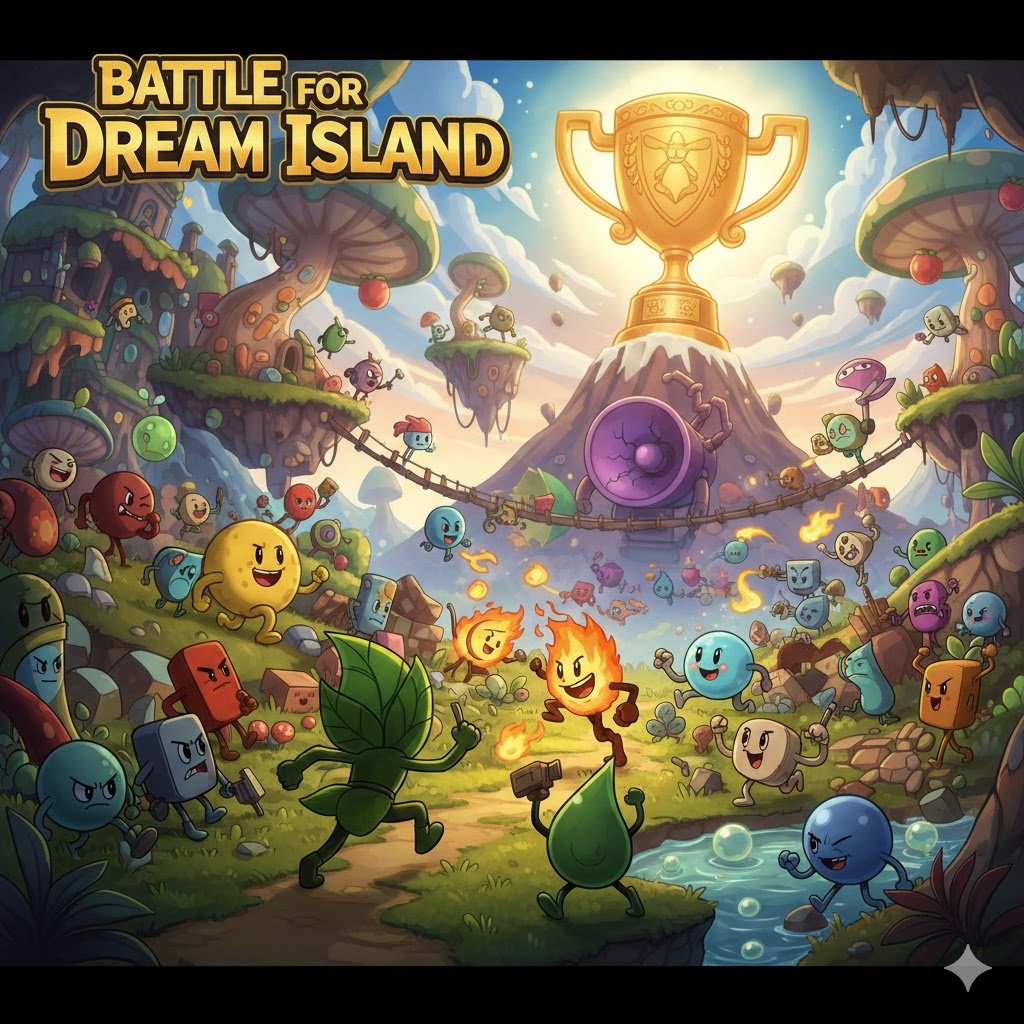
Some shows sneak into your life quietly. Others crash through the door, knock over the furniture, and somehow convince you to stay. Battle for Dream Island belongs firmly in the second category. At first glance, it looks odd talking objects, absurd challenges, and a host who’s literally a number. But give it a minute, and suddenly you’re invested. Really invested.
This article explores what makes the series tick, why it captured such a loyal fanbase, and how something so strange managed to feel so familiar. We’ll wander through its humor, characters, storytelling choices, and cultural impact, taking a relaxed but thoughtful approach. No stiff analysis here just a curious dive into a surprisingly deep animated world.
Let’s jump in.
What Is Battle for Dream Island, Anyway?
Trying to explain the show to someone who’s never seen it can feel like describing a dream after waking up. “So there are objects… and they talk… and they compete… for an island?” It sounds ridiculous, and honestly, it is. That’s part of the charm.
At its core, the show is a competition series where anthropomorphic objects face challenges to win ownership of a luxurious place called Dream Island. Contestants get eliminated one by one, alliances form and crumble, and chaos is always just one bad decision away. Yet beneath the silliness lies structure, pacing, and a surprising emotional rhythm.
The Power of Simple Animation and Big Ideas
The animation style doesn’t try to impress with flashy visuals. Lines are clean. Colors are bold. Movements are functional. This simplicity does two things:
-
It keeps the focus on dialogue and timing.
-
It lowers the barrier for new viewers.
Because the visuals aren’t overwhelming, the ideas stand out more. Jokes land harder. Awkward silences feel intentional. Emotional beats sneak up on you.
Sometimes, less really is more.
Characters That Feel Weirdly Real
Here’s the funny thing: even though the characters are objects, they act like people you know. There’s the overconfident one, the anxious one, the manipulator, the loyal friend who gets overlooked. Sound familiar?
Each character is defined by a clear personality trait, but they’re not stuck there. Over time, they react, change, and sometimes contradict themselves. That flexibility makes them feel alive.
Common character dynamics include:
-
Rivalries fueled by misunderstandings
-
Friendships tested by competition
-
Leaders who don’t always lead well
-
Followers who eventually push back
It’s exaggerated, sure, but it mirrors real social behavior more than you’d expect.
Humor That Doesn’t Play It Safe
The humor style is unapologetically weird. Jokes can be dry, abrupt, or layered in a way that rewards repeat viewing. Some punchlines fly by so fast you miss them the first time.
What stands out is the willingness to embrace awkwardness. Silence is used as comedy. Overreactions become punchlines. Logic is bent, snapped, then taped back together.
And somehow, it works.
Storytelling That Evolves Over Time
Early episodes feel episodic. Challenges happen, someone loses, someone leaves. But as the series progresses, threads start connecting. Decisions matter. History matters.
The storytelling becomes more serialized, allowing:
-
Long-running conflicts
-
Character arcs that span seasons
-
Callbacks that reward attentive viewers
-
Emotional stakes that slowly build
This evolution keeps the show from feeling stale. It grows up with its audience, without losing its playful edge.
The Competitive Structure: Simple but Effective
Competition is the backbone of the series. Without it, the chaos would scatter. With it, there’s direction.
The structure usually involves:
-
A challenge announced by the host
-
Teams or individuals competing
-
A losing side facing elimination
-
Viewer participation influencing outcomes
That last point—audience involvement—plays a huge role in the show’s success. Fans aren’t passive. They feel like participants.
Why Audience Participation Matters
When viewers get to vote or influence results, investment skyrockets. Suddenly, you’re not just watching; you’re choosing sides. You care who stays and who goes.
This participatory element:
-
Builds community discussion
-
Encourages fan theories
-
Sparks debates and memes
-
Keeps episodes feeling relevant
It turns entertainment into a shared experience, and that’s powerful.
Internet Culture and the Show’s Rise
The series didn’t rely on traditional distribution. It thrived online, spreading through shares, comments, and word-of-mouth enthusiasm.
Internet culture embraced it because:
-
The humor fit short attention spans
-
Characters were meme-ready
-
Episodes were easy to revisit
-
Fans felt acknowledged
In many ways, it feels tailor-made for online spaces, even if that wasn’t the original plan.
Themes Hidden Beneath the Chaos
Despite the absurd surface, several themes quietly repeat throughout the show.
Some of the most noticeable include:
-
Identity: Who are you when stripped of status or power?
-
Fairness: Is winning worth compromising values?
-
Belonging: Where do you fit in a competitive group?
-
Change: Can people—or objects—really change?
These themes aren’t preached. They’re experienced through conflict and consequence, which makes them stick.
Emotional Moments That Catch You Off Guard
You don’t expect to feel things while watching animated objects argue. Then suddenly, there’s a moment. A betrayal. A sacrifice. A quiet realization.
Because the show doesn’t constantly aim for emotional impact, those moments hit harder when they arrive. They feel earned, not forced.
It’s a clever balance between silliness and sincerity.
Fan Creativity and Community
The fanbase didn’t just watch the show. They expanded it. Fan art, animations, theories, and even original object shows emerged, inspired by the format.
This creative feedback loop strengthened the community. New fans arrived not just through episodes, but through fan-made content.
That level of engagement is rare and speaks to how inviting the universe feels.
Criticisms and Growing Pains
No series is immune to criticism. Some viewers point out pacing issues. Others debate character decisions or eliminations. That’s natural, especially in a show shaped partly by audience input.
What matters is responsiveness. Over time, the creators experimented, adjusted, and refined. Not every change pleased everyone, but stagnation was never the default.
Why It Still Matters Today
Years after its debut, people still talk about it. They revisit episodes. They introduce it to new viewers. That staying power isn’t accidental.
The show matters because it proves:
-
Creativity doesn’t need massive budgets
-
Online platforms can nurture original storytelling
-
Absurd ideas can carry emotional weight
-
Audiences appreciate being trusted
In a crowded content landscape, that’s no small achievement.
FAQs
What is Battle for Dream Island about?
It’s a competition-based animated series where anthropomorphic objects compete in challenges to win Dream Island.
Why did it become so popular online?
Its humor, audience participation, and shareable format made it ideal for internet communities.
Is the show suitable for all ages?
While accessible to younger viewers, older audiences often catch deeper jokes and themes.
Do characters change over time?
Yes, character development is a key part of the later storytelling.
Is viewer voting important?
Absolutely. Audience input influences eliminations and adds to engagement.
Conclusion
At face value, Battle for dream island looks like nonsense. Talking objects? Ridiculous challenges? A prize that’s literally an island? And yet, beneath the chaos lies thoughtful storytelling, clever humor, and a genuine connection with its audience.
It doesn’t try to be everything. It just commits fully to what it is. That confidence, paired with creativity and community involvement, turned a strange idea into something memorable.
In the end, maybe that’s the real lesson. You don’t need to make sense to everyone. You just need to make sense to the people who stick around and this show gave them plenty of reasons to stay.